Why Light Protection Matters for Skincare Products?
Light is an important but often overlooked factor in skincare stability. Ultraviolet radiation and some wavelengths of visible light can trigger photochemical reactions in a formula. Over time, these reactions may accelerate oxidation, reduce active ingredient potency, and change a product’s color, odor, texture, or overall performance.
Ingredients that may require additional protection include vitamin C and its derivatives, retinol, certain peptides, botanical extracts, essential oils, and other antioxidants. A formula can be well designed and properly preserved, yet still lose quality if its primary container allows too much light to reach the product during filling, transportation, retail display, and daily use.
For skincare brands, cosmetic manufacturers, and packaging procurement teams, packaging should therefore be treated as part of the product stability system—not simply as a decorative component. The right package must match the formula’s sensitivity, viscosity, filling method, dosage requirements, expected shelf life, and brand positioning.
Which Packaging Types Best Prevent Light Damage?
1.Amber Glass vs. Opaque Airless Bottles: Which Should You Choose?
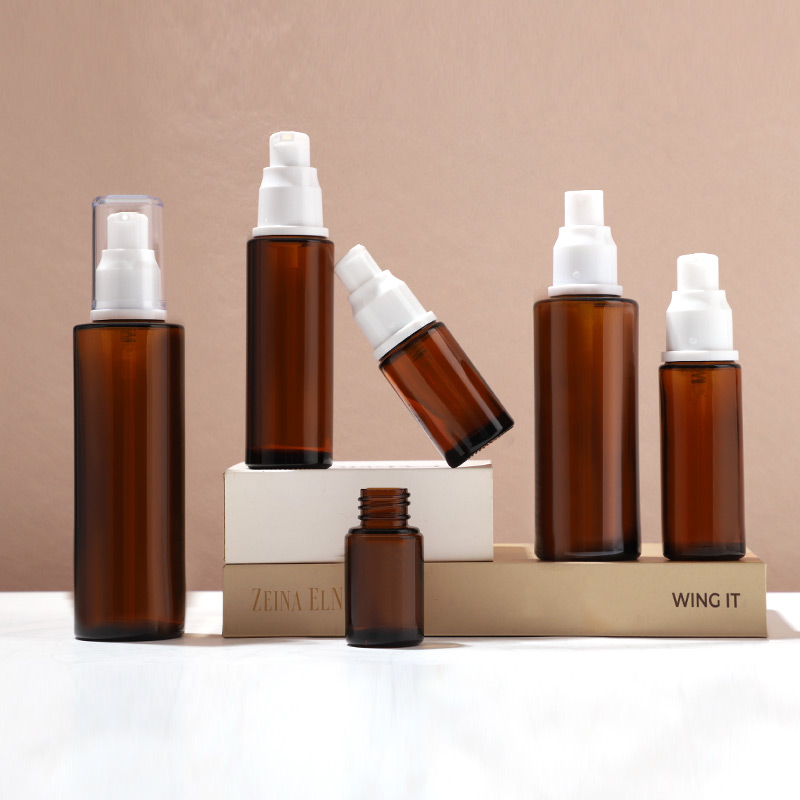
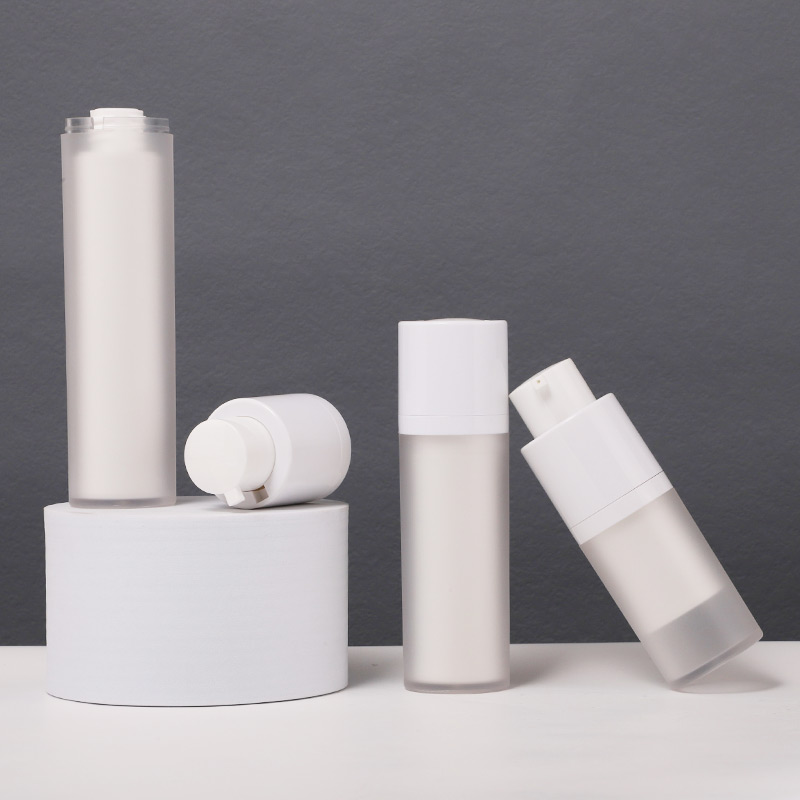
| Procurement considerations | Amber Glass Dropper | Opaque Airless Bottle |
| Light Protection | Depends on glass specifications | Depends on shell opacity |
| Air exposure | Depends on closure and use | Reduced air exchange |
| Dispensing | Drop by drop | Measured pump |
| Best application | Serum,facial oils | Cream,lotions,emulsions |
| Brand appearance | Premium and transparent | Modern and functional |
No single package is ideal for every skincare formula. The most suitable option depends on the level of light protection required and whether the formula is also sensitive to air, moisture, or contamination.
Opaque packaging blocks most or all visible light from reaching the formula. It is often selected for highly light-sensitive creams, serums, balms, and functional skincare products containing delicate active ingredients.
Opaque containers can be produced from pigmented HDPE/PP, heavy-wall PETG, or clear glass finished with full-coverage opaque spray coatings. The primary trade-off is that consumers and quality control teams cannot visually inspect fill levels or formula texture. Brands frequently solve this by integrating a narrow viewing window, an airless level indicator, or clear dosage instructions on the outer carton.
When specifying opaque containers, buyers should verify pigment loading percentages, wall thickness, and light-transmission test data rather than judging opacity visually under standard room lighting.
3.Aluminum Tubes and Bottles
Aluminum tubes and bottles provide excellent protection from light and can be an effective choice for creams, balms, ointments, and other medium- to high-viscosity products. They are also lightweight compared with many glass formats and can offer good resistance to transport-related handling.
The interior of an aluminum package normally requires a suitable coating or lining. This layer must be compatible with the formula, so compatibility, adhesion, odor transfer, and coating integrity should be tested before mass production. The tube shoulder, closure, filling line, decoration method, and dispensing experience should also be considered together.
4.Airless Pump Bottles
Airless pump bottles are designed primarily to reduce air exchange and product contamination, but they can also support light protection when the outer container is opaque, tinted, or otherwise light-resistant. They are commonly used for creams, lotions, emulsions, gels, and some thicker serums.
Unlike a conventional pump bottle with a dip tube, an airless system usually uses a movable piston or a flexible inner bag. As the product is dispensed, the piston moves upward or the bag collapses. This limits the amount of air that replaces the removed product and helps reduce backflow through the dispensing opening.
Airless packaging can help reduce exposure to oxygen, dust, external particles, and repeated direct handling. It may also improve product evacuation and reduce residue at the bottom of the container. However, “airless” does not necessarily mean that the package creates a perfect vacuum. Performance depends on the pump design, seals, piston movement, inner bag material, actuator, and manufacturing quality.
For formulas that are both light- and oxygen-sensitive, an opaque or tinted airless container may provide a more complete protection strategy than a clear airless bottle.
5.UV-Protective Coatings
UV protective cosmetic packaging may use a coating on glass, plastic, or an exterior decorative layer to reduce transmission of selected wavelengths. This option can help brands retain some product visibility while lowering Uv exposure.
Coatings may be combined with tinted glass, transparent plastic, printing, or a protective varnish. Their performance depends on chemistry, thickness, curing, adhesion, abrasion resistance, and long-term durability. A UV coating does not automatically make a package opaque, and it does not reduce air exchange by itself.
Request transmission data and evaluate the coating after filling, handling, transportation simulation, and repeated use. Decorative treatment should support-not replace-formula-specific light-stability testing.
Skincare Packaging Comparison Matrix
| Packaging Type | Light Protection | Air Protection | Best For | Main Limitation |
| Opaque packaging | Excellent when properly specified | Depends on the closure | Highly light-sensitive formulas | Limited product visibility |
| Aluminum tubes and bottles | Excellent | Depends on sealing and closure | Creams, balms, and functional products | Requires lining compatibility testing |
| Amber glass | Very good, depending on specifications | Moderate with a standard closure | Serums, oils, and active treatments | Heavier and more fragile than plastic |
| Cobalt blue glass | Moderate to good, depending on transmission data | Moderate with a standard closure | Premium botanical and active formulas | Spectral performance varies |
| Airless pump bottles | Moderate to excellent when paired with a light-resistant shell | Excellent compared with conventional containers | Creams, emulsions, and sensitive formulas | More components and higher design complexity |
| UV-protective coatings | Good for selected wavelengths | No direct air protection | Transparent or decorative packaging | Requires durability and transmission testing |
The best choice is often a combination rather than a single feature. For example, an opaque airless bottle can address light, oxygen, and contamination, while amber glass paired with a suitable secondary carton can provide a premium solution for a liquid serum.
How Can Brands Balance Light Protection and Brand Aesthetics?
Strong light protection does not require a plain or unattractive package. Several design strategies allow brands to combine formula protection with a premium visual identity.
Double-Wall Packaging
Double-wall packaging separates functional protection from exterior design. An opaque inner container can protect the formula, while a transparent or translucent outer shell creates visual depth, weight, and a glass-like appearance. The exterior may include gradients, frosting, metallic decoration, or a sculpted shape without exposing the formula directly to the same level of light.
This structure is useful for brands that want a luxurious appearance but cannot rely on clear packaging alone. It may also provide additional protection against handling and minor impact, although the complete package still requires transport and compatibility testing.
Secondary Packaging
A paper carton can reduce light exposure during transportation, warehouse storage, and retail display, especially under strong store lighting. It should support—not replace—the primary container, because consumers may remove it before use. Carton copy can also recommend storage away from direct sunlight and excessive heat.
Ampoules and Single-Dose Capsules
Ampoules and single-dose capsules reduce the time a formula remains open after use. They are suitable for concentrated treatments, professional skincare, intensive courses, and formulas that are particularly sensitive to air or light after opening.
Single-dose formats can improve freshness and dosing consistency, but they may increase packaging cost and material use. Evaluate filling efficiency, breakage resistance, convenience, recycling requirements, and the environmental impact of the complete format.
Common Misconceptions About Light-Protective Packaging
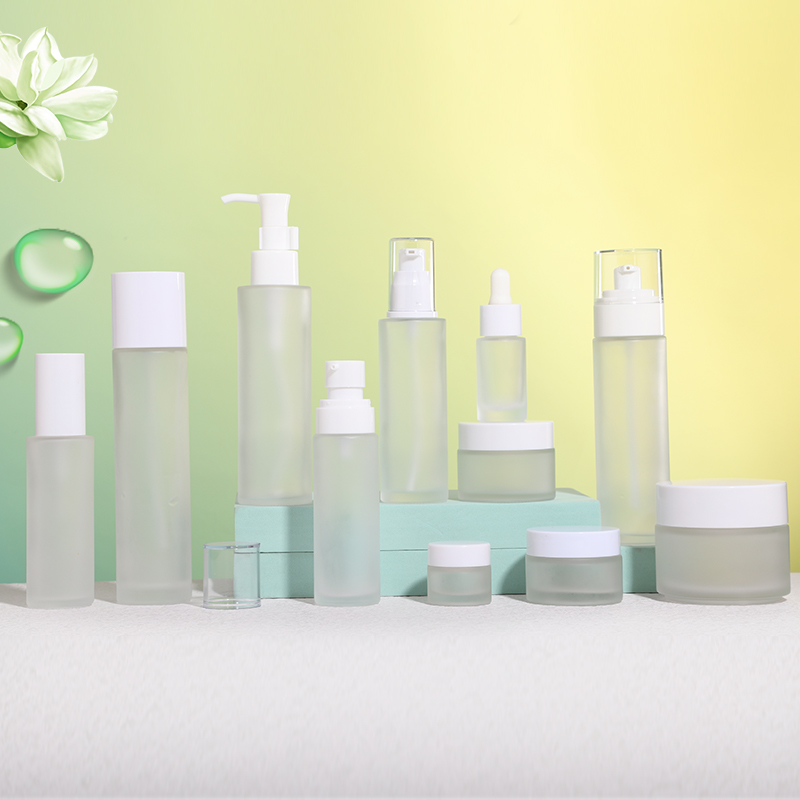
Myth 1: Frosted Glass Blocks Sunlight
Frosted glass mainly scatters and diffuses light. It can reduce glare, improve grip, and create a soft, premium appearance, but it is not automatically opaque. A frosted container may still allow significant light transmission.
If the formula is highly photosensitive, frosted glass should be supported by transmission data or combined with a darker glass color, an opaque inner layer, a UV-protective coating, or suitable secondary packaging.
Myth 2: Blue Glass and Amber Glass Offer the Same Protection
Blue and amber glass do not necessarily have the same light-filtering profile. Amber glass often provides stronger attenuation of UV and some short-wavelength visible light than clear glass, while blue glass may block and transmit different wavelength ranges depending on its composition and thickness.
The correct choice should be based on the formula’s sensitivity and the supplier’s spectral transmission data. Color is a useful starting point, but it is not a substitute for technical testing.
How to Choose the Right Packaging for a Light-Sensitive Formula?
Before selecting a package, procurement teams should assess the following questions:
●Is the formula sensitive to UV, visible light, oxygen, or a combination of these factors?
●Is the product a liquid, lotion, gel, cream, oil, or balm?
●Does it require drop-by-drop dosing or a measured pump dose?
●Would a piston or inner bag airless system improve product protection?
●Does the brand need a glass dropper bottle refillable format?
●What capacity, filling method, and production volume are required?
●Will the product be sold with a carton or displayed without secondary packaging?
●Does the package require custom printing, frosting, spraying, silk screening, or hot stamping?
●Has the final filled package passed compatibility, leakage, dispensing, light-stability, and transport testing?
A glass dropper bottle is often a strong option for fluid serums and facial oils that require controlled dosing and a premium appearance. For thicker or highly oxygen-sensitive formulas, an airless pump may offer better protection and more efficient product evacuation. A professional China cosmetic packaging supplier can help compare these systems according to the formula and target market.
Looking for the Right Light-Protective Skincare Packaging?
Choosing light-protective packaging is not simply about selecting a darker bottle. The right solution depends on your formula's light sensitivity, oxygen exposure, dispensing requirements, and brand positioning.
At Panyue, we offer customizable glass skincare packaging solutions, including amber glass dropper bottles, colored glass bottles, and airless packaging options.
Whether you are developing a vitamin C serum, facial oil, or active skincare cream, our team can help you evaluate suitable bottle structures, glass colors, capacities, closures, and surface finishes.
Contact Panyue to discuss your packaging requirements and request samples for your next skincare project.